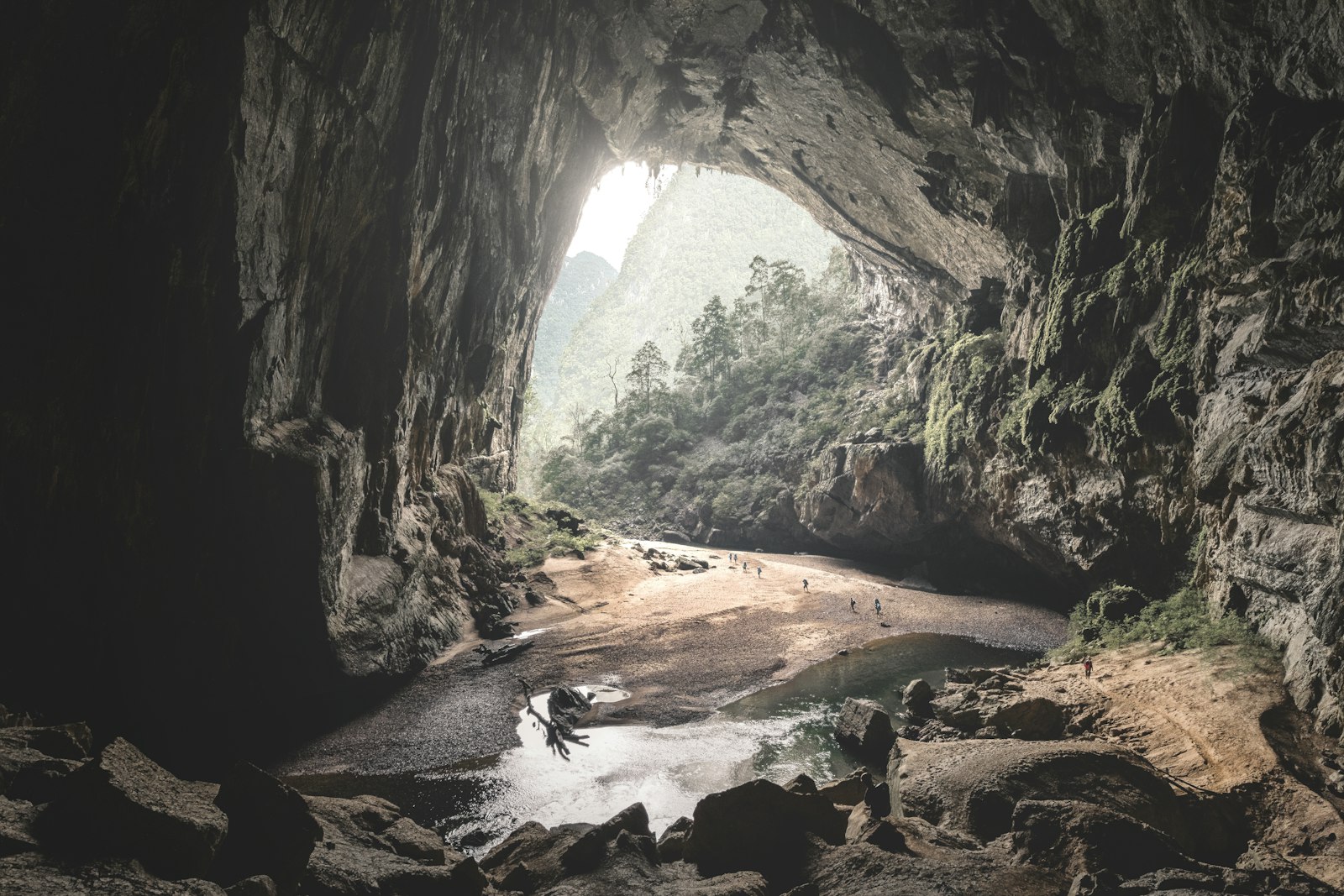
What Is Son Doong?
Son Doong — literally "mountain river cave" in Vietnamese — is the largest known cave passage anywhere on Earth, measured by volume. It lies hidden beneath the dense jungle of Phong Nha-Ke Bang National Park in Quang Binh Province, close to the border with Laos. Despite its scale, it was largely unknown to the outside world until 2009, when a British-Vietnamese caving team made the first full survey of its passages.
The numbers alone do not fully capture the experience. In its broadest sections the cave is roughly 150 metres wide and 200 metres high, and its surveyed length runs to around nine kilometres. Within this space, an entire independent environment has developed: jungle grows where daylight enters, rivers flow through the rock, and atmospheric conditions can produce cloud and mist inside the largest chambers.
Discovery and History
A hunter named Ho Khanh first stumbled upon the cave entrance in 1991, drawn by the sound of rushing water deep underground and a wind pushing out from the opening. The entrance was steep and unfamiliar, and for years he could not locate it again precisely. When he eventually guided a team from the British Cave Research Association back to the site, what they found was unlike anything previously documented.
The 2009 expedition confirmed Son Doong as the world's largest cave passage, surpassing all previously surveyed caves in raw volume. That discovery set in motion the careful preparation that led to the first commercial expeditions in 2013, under a controlled access system designed to limit the cave's environmental impact.
The Cave's Interior: What You Will Actually See
Much of what makes Son Doong extraordinary is what the scale makes possible inside it. Two huge sections of ceiling have collapsed over geological time, creating what cavers call dolines — shafts of open sky that let daylight pour in to the cave floor. Where the light is strong enough, jungle has taken hold: full-sized trees, ferns and shrubs growing hundreds of metres underground, hosting birds and insects in a world entirely isolated from the surface forest above.
Beyond the living jungle, the cave features:
- A fast underground river that carved the passage over millions of years and continues to flow through it. Crossing and wading through it is a central part of the experience.
- Ancient stalagmite formations, some among the tallest documented anywhere, alongside shimmering cave pearls formed in shallow terraced pools.
- The Great Wall of Vietnam, a towering calcite flowstone barrier near the far end of the cave that must be climbed on fixed ropes to reach the final chambers.
- Cloud and mist that can form when the temperature and moisture inside the cave's largest chambers create their own localised atmospheric system.
The Permit System Explained
Access to Son Doong is tightly regulated. The Vietnamese authorities have granted a single operator an exclusive licence to run expeditions, in partnership with the British-Vietnamese caving team that surveyed the cave. No other company can legally take visitors through Son Doong, and the annual quota of permits is deliberately kept low to prevent environmental damage to a site that took millions of years to form.
On prices and availability: The expedition is frequently booked out seasons in advance. Prices are not published here because they change. For current dates, costs and the booking process, contact the licensed operator directly.
What the Six-Day Expedition Involves
A Son Doong trip is a proper expedition, not a day tour. The standard itinerary runs over six days and five nights. Day one involves a jungle trek to the cave entrance through the national park, often stopping at the vast chambers of Hang En for the first night. From there, the expedition moves into Son Doong itself, spending further nights camped on sandy floors within the cave as the group works its way through the passage.
The terrain varies significantly. Early sections involve crossing and wading the cave river. Mid-cave brings the dolines and their underground jungle. The final stretch requires ascending the Great Wall on fixed ropes. Throughout, the guide team — which includes experienced cavers, safety personnel, porters and cooks — manages the group's progress and sets up camp. Group numbers are strictly controlled.
Who Is This Expedition Suited To?
Son Doong carries a challenging rating, and the rating is accurate. To have a rewarding experience, you should be:
- Physically fit enough to trek for hours each day carrying a daypack over uneven cave terrain.
- Comfortable swimming in moving water, including through sections where the only route is through the river.
- Confident on rope ascents — there is no bypass around the Great Wall climb.
- Prepared for remote camping with no hot showers or reliable mobile signal.
If the expedition sounds beyond your current level, it is worth considering Hang En as a one-night alternative, or one of the multi-day Tu Lan expeditions. Our difficulty guide lays out how the options compare.
Best Season for Son Doong
Expeditions operate in the dry season, generally between February and August. During the monsoon — broadly September through January — the cave river rises to dangerous levels and tours are suspended. Even within the dry season, individual departure dates are set by the operator, and booking well ahead (often a year or more) is essential for popular departure slots.
Son Doong vs Other Phong Nha Caves
Son Doong is the crown jewel, but it is far from the only remarkable cave in the region. Hang En, passed on the way into Son Doong, can be visited as a standalone overnight trip and is itself one of the largest cave passages on Earth. The Tu Lan system offers river-caving adventures that appeal to many of the same travellers at a lower cost and commitment. Choosing between them depends on your fitness, budget and availability.
Frequently Asked Questions
The standard Son Doong expedition runs over six days and five nights. This covers the jungle trek to the entrance, the journey through the cave, and the return route out through the national park.
Son Doong is a high-cost, permit-limited expedition. Prices reflect the full guide team, porters, safety personnel and equipment for the six-day journey. Costs vary by season — check directly with the licensed operator for current pricing.
Visits are strictly controlled. Only a fixed number of permits are issued each season, and all tours must go through a single licensed operator authorised by Vietnamese authorities. Self-guided or independent access is not possible.
Son Doong is rated challenging. Participants need a solid base of cardiovascular fitness, comfort with multi-day trekking, confidence swimming in moving water and no strong fear of heights — there is a rope-assisted climb near the far end.
Expeditions run in the dry season, typically February to August. Rising water levels and flood risk close the cave during the autumn and winter monsoon period.
Son Doong contains two enormous skylights (dolines) where the ceiling has collapsed, letting daylight reach the cave floor and allowing jungle to grow underground. There is a fast underground river, ancient stalagmites, cave pearls and the Great Wall of Vietnam — a massive calcite flowstone barrier.
The expedition operates with an extensive team of guides, cave experts, porters and safety staff using professional caving equipment. It remains a demanding wilderness trip with inherent risk, so participants must be fit, follow instructions and be honest about any health limitations.
Hang En lies on the route to Son Doong and can be visited as a standalone overnight trip. Son Doong is considerably larger, requires six days and operates under a separate permit with strict annual limits. Hang En makes an excellent alternative for those who want a world-class cave without the full commitment.
Continue exploring: compare all trips in our tours overview, or use the difficulty guide to find the right expedition for your fitness level.